
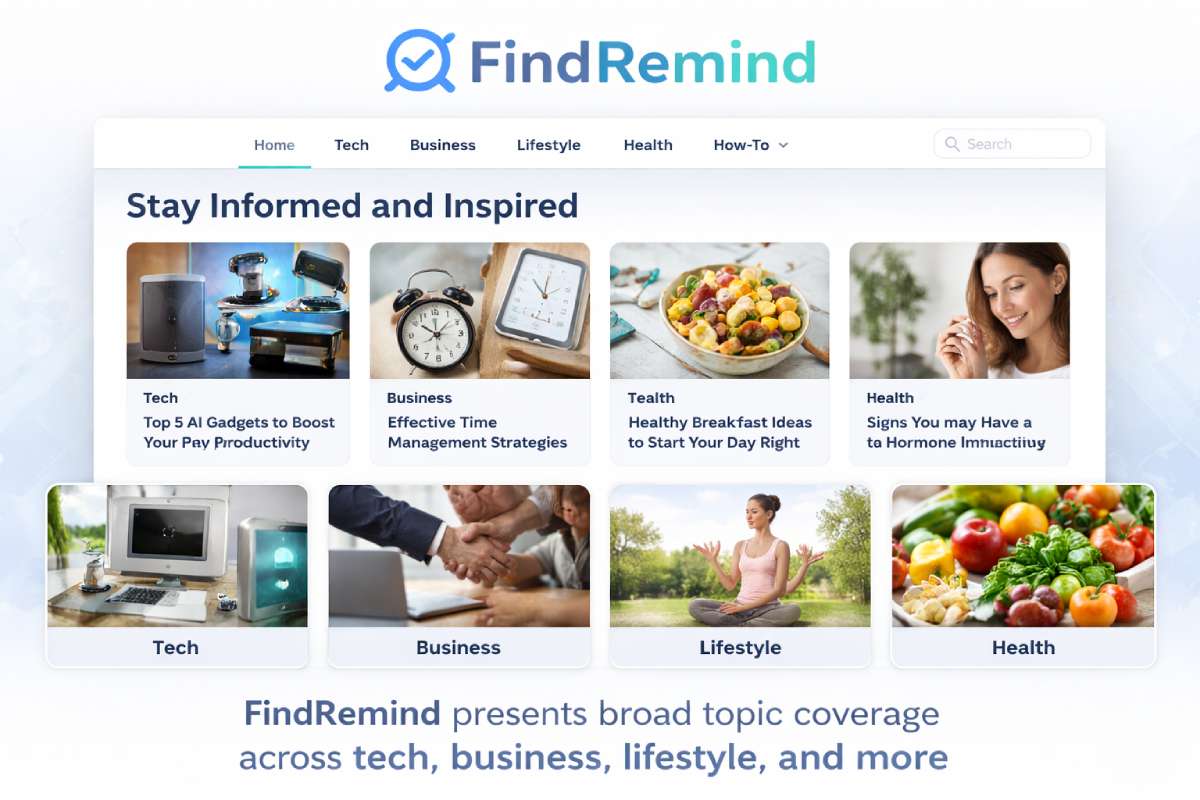
If you searched findremind, you are probably trying to answer a simple question: is this a useful content site, and what exactly does it do? FindRemind currently positions itself as a broad editorial hub rather than a single-topic tech blog. Its homepage lists categories including Technology, Business, Finance, History, Lifestyle, Personal Growth, and Relationships, while its About page states that the site aims to provide reliable, engaging, and easy-to-understand content that helps readers stay informed and inspired.
That matters because a site like this should be judged differently from a niche specialist blog. A broad content hub can be helpful for quick reading, trend scanning, and general learning, but it should not automatically be treated as the final authority on high-stakes topics. The right way to read FindRemind is to understand what kind of site it is, what kind of content it publishes, and where you should verify information elsewhere.
FindRemind describes itself as a broad content hub built to keep readers informed, inspired, and up to date on its About page.
Table of Contents
Search Intent Snapshot
| Element | Best-fit interpretation |
| Search intent type | Branded informational/navigational |
| User goal | Understand what FindRemind is and whether it is useful. |
| Expected answer depth | Medium to deep |
| Likely need | Explanation, evaluation, quick credibility check |
What FindRemind Is
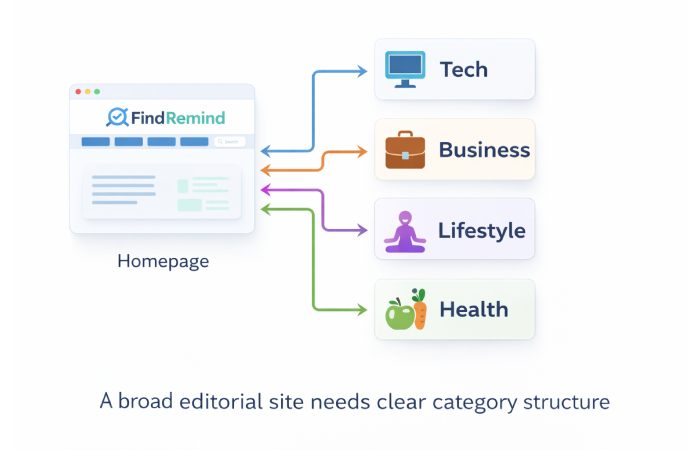
FindRemind describes itself as a place for “timely insights, tips, and reminders that matter,” and its About page says it aims to help readers find useful information and remember what matters most. The site’s broad category structure suggests a general-purpose publishing model rather than a narrow expert publication.
On the homepage, the site currently displays posts across themes such as technology, business, finance, relationships, history, and lifestyle. That mix is useful if you want variety. Still, it also means the reader needs to pay attention to article quality, author context, and topic relevance rather than assume every post carries the same level of depth.
On the site’s homepage, FindRemind currently organizes content across Technology, Business, Finance, History, Lifestyle, Personal Growth, and Relationships.
Quick Summary Table
| Signal | What it suggests |
| Broad category spread | General-interest editorial strategy |
| Clear mission statement | The site wants to feel accessible and useful. |
| Mixed topics on homepage | Designed for casual discovery |
| General tone | Easy-to-read explanations, not deep specialization |
| Reader takeaway | Good for browsing, but still worth fact-checking important claims |
Beginner Explanation
At its simplest, FindRemind is a blog-style site that collects articles across several life and knowledge categories. If you want a short explainer, an idea starter, or a casual read, it fits that purpose well.
For a beginner, the most important thing to understand is this: a broad website is not always a deep website. It can be helpful without being authoritative on every subject it touches.
Intermediate Explanation
At an intermediate level, FindRemind works like a content discovery platform. It tries to keep the reader moving through related topics, which is why you see everything from technology to personal growth in one place. That structure can increase session depth and make the site feel active. Still, it creates a challenge: readers need stronger internal signals to distinguish which articles are foundational, which are opinion-led, and which are just lightweight explainers.
That means the site’s usefulness depends less on the label “blog” and more on how well each article is written, sourced, and updated.
Advanced Explanation
At an advanced level, FindRemind appears to be a broad-capture publishing model that aims to attract search traffic across multiple topic clusters. That model can work when the site has strong topical organization, clear editorial standards, and well-defined content boundaries. It becomes weaker when categories are too mixed, article depth is inconsistent, or trust signals are thin.
In practical SEO terms, broad blogs often win by covering more keyword paths. They lose when they look generic, when articles overlap too much, or when the site appears to publish across many niches without enough subject-matter authority.
What Most People Misunderstand
The biggest misunderstanding is assuming that a site with many categories is automatically shallow.
That is not always true.
A broad site can still be useful if it has:
- clean editorial structure
- clear article purpose
- consistent readability
- honest expectations about depth
The other common mistake is treating a site like FindRemind as a specialist authority on finance, business, or technology just because it covers those topics. Coverage is not the same thing as expertise.
Who This Site Is For
FindRemind is best for readers who want:
- lightweight explanations
- topic variety
- quick scans across general-interest subjects
- simple, easy-to-follow writing
- ideas for everyday learning
It is also useful for people who enjoy browsing across topics rather than staying in one niche.
Who This Site Is Not For
FindRemind is not the best fit for readers who need:
- medical decisions
- legal interpretations
- investment advice
- academic research sources
- highly technical documentation
For those use cases, you should move from a general article to primary sources, official documentation, or field-specific experts.
Real-Life Interpretation Examples
If you are reading a FindRemind article about technology, the best way to use it is as a starting point. You can learn what a concept means, get a quick overview, and then compare that explanation with documentation or a specialist source.
If you are reading a FindRemind article about personal growth or relationships, it may be more useful as a framework for reflection than as a hard-and-fast rulebook. In that case, the value is in clarity, not final authority.
If you are reading a finance article, the right move is to treat it as a general introduction and verify any important numbers, rules, or deadlines before acting on it.
When to Worry
You should be more cautious when:
- a post makes a factual claim without clear evidence
- A finance or business article sounds too broad to be actionable
- A topic sounds time-sensitive, but the article does not show strong recency signals
- The page asks you to trust it on a high-stakes issue without showing enough sourcing
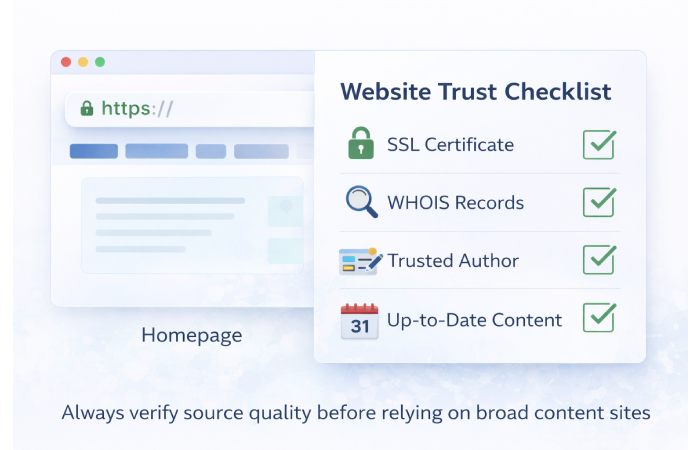
A third-party scan of findremind.com notes a valid SSL certificate, hidden WHOIS details, and a young domain age. That does not prove a problem, but it does mean readers should verify important claims before relying on the site for decisions.
A third-party scan in Scamadviser’s report notes a valid SSL certificate, hidden WHOIS details, and a young domain age, which is a good reason to verify important claims before relying on the site.
When Not to Worry
You do not need to worry much when:
- the article is opinion-based or inspirational
- the topic is low-risk, like general productivity or lifestyle reading
- You are using the site for casual discovery
- You are cross-checking with stronger sources afterward
In other words, the site can still be perfectly useful even if it is not your final source of truth.
Common Mistakes Readers Make
The most common mistakes are:
- treating a general blog like a specialist journal
- trusting a single article without checking the author or source quality
- using a broad site as the final answer for important decisions
- skipping date checks on fast-moving topics
A good rule is simple: the broader the topic, the more careful the reading should be.
How to Read FindRemind Smartly
Use a three-step filter.
First, ask whether the article is informational, opinion-based, or trend-focused.
Second, check whether the page gives enough detail for the question you actually have.
Third, decide whether the topic requires a stronger source before you act on it.
That approach lets you keep the useful part of FindRemind while avoiding overconfidence in weakly supported claims.
FAQs
What is FindRemind?
FindRemind is a broad content site that publishes articles across categories like Technology, Business, Finance, History, Lifestyle, Personal Growth, and Relationships.
Is FindRemind a niche site?
No. It presents itself as a general-interest platform rather than a single-topic specialist site.
Can I trust FindRemind for important decisions?
Use it as a starting point, then verify important claims with primary or specialist sources. A third-party scan also notes hidden WHOIS details and a young domain, so caution is sensible.
Who should read FindRemind?
Readers who want simple, general-interest explainers, quick insights, and broad topic browsing will get the most value from it.
Final Evaluation
FindRemind is best understood as a broad, reader-friendly content hub with a general-purpose editorial identity. Its About page says it wants to help readers stay informed, inspired, and up to date, and its homepage shows it is built around multiple lifestyle and knowledge categories rather than a single narrow specialty.
So the fair summary is this: FindRemind is useful for discovery, but it should be treated as a starting point, not the last word, especially on topics where accuracy really matters.